

SpecKare LBA
SpecKare LBA – 4th-Generation Lactobionic Acid: Gentle, Moisturizing and Multi-Functional for the Skin
INCI: Lactobionic Acid
✔ SpecKare LBA is Lactobionic Acid, belonging to the BA/PHBA (Bionic Acid/Polyhydroxy Bionic Acid) group – the next generation in the development of Hydroxy Acids. Beyond supporting skin surface renewal, SpecKare® LBA is also distinguished by its mildness, moisturizing ability, antioxidant activity, brightening support, oil-balancing effect and anti-aging benefits.
1. From AHA to 4th-Generation Lactobionic Acid
✔ If the 1st generation is Glycolic Acid, then the 2nd generation is Mandelic Acid, developed with improved mildness and lipophilicity.
✔ Moving to the 3rd generation – PHA, represented by ingredients such as Gluconolactone and Gluconic Acid, Hydroxy Acids were further improved in terms of mildness, moisture retention, additional skin-care functions and reduced photosensitivity.
✔ In the 4th generation – BA/PHBA, Lactobionic Acid is one of the key representatives. SpecKare LBA inherits the advantages of PHA while extending its benefits for comprehensive skin care.
2. International Certifications and Approvals of SpecKare LBA:
COSMOS Approved
HALAL Approved
AVA Certified Vegetarian
=> These certifications provide added value and support the development of cosmetic products for different market positioning and requirements.
3. PROPERTIES AND BENEFITS
3.1 Mildness and Skin Safety
✔ In a 3D Reconstructed Human Epidermis model according to OECD TG 439, SpecKare LBA achieved a tissue viability of 87.70% (>50%) and was considered non-irritating to the skin under the test conditions.
✔ In addition, at concentrations not exceeding 0.625%, SpecKare LBA showed no allergenic potential at the cellular level.
3.2 Antioxidant Capacity
✔ SpecKare LBA was evaluated for its ability to scavenge hydroxyl radicals (·OH).
✔ At a concentration of 10 mg/mL (~1%), SpecKare LBA achieved a 70% hydroxyl radical scavenging rate.
=> The results demonstrate the clear antioxidant capacity of Lactobionic Acid.
3.3 Moisturizing Performance – Helping Reduce Transepidermal Water Loss
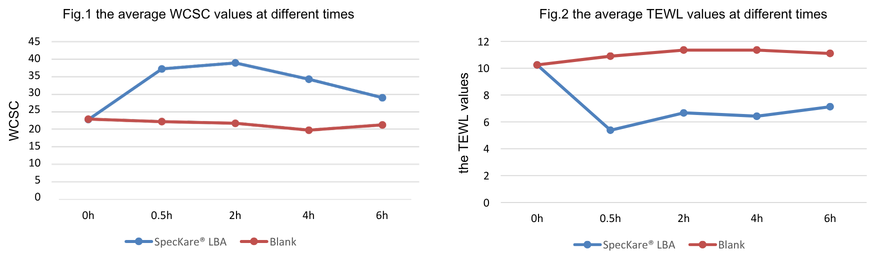
✔ The test was conducted on 5 volunteers aged 25–55 years, using 5% SpecKare LBA on the inner side of the forearm and comparing it with water as the control.
=> The results showed that WCSC (Water Content of the Stratum Corneum) increased significantly, while TEWL (Transepidermal Water Loss) decreased significantly compared with the control.
This indicates that SpecKare LBA helps increase stratum corneum hydration and reduce water loss through the skin.
3.4 Supports Oil Balance
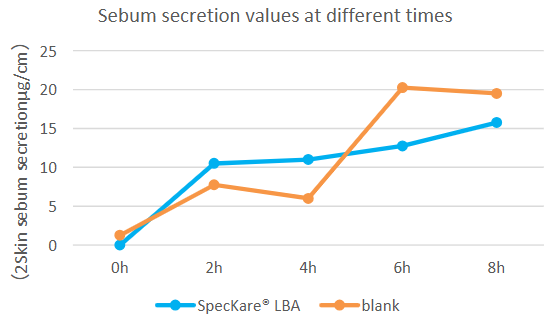
✔ The oil-balancing ability was evaluated on 4 female volunteers aged 25–55 years.
✔ A solution containing 6% SpecKare LBA was applied to one side of the face, while the other side received the control sample. Sebum secretion was monitored for 8 hours.
=> The results showed that the area treated with 6% SpecKare LBA had a slower increase in sebum secretion and maintained a relatively lower sebum level for a certain period of time.
Therefore, SpecKare LBA is suitable for formulations designed to support oil balance in the skin.
3.5. Improves Skin Brightness – More Prominent Brightening Performance than Glycolic Acid
✔ In an in vivo test comparing 6% Lactobionic Acid (LBA) with 6% Glycolic Acid (GA), LBA showed better skin-brightening performance than GA. At the same time, TEWL did not increase, indicating that the skin barrier function was maintained. The EI value also decreased, demonstrating good skin mildness under the test conditions.
✔ In addition, in a 3D Melanocyte Model exposed to UVB, 0.625% SpecKare LBA reduced both the content and distribution of melanin on the surface and in deeper layers of the skin model.
=> Conclusion: SpecKare LBA helps reduce melanin accumulation and improve skin brightness, while demonstrating a brightening advantage over Glycolic Acid in the comparative test.
3.6 Boosts Collagen Type I Synthesis
✔ In fibroblasts exposed to UVA, Collagen Type I content decreased significantly.
✔ In fibroblasts exposed to UVA, Collagen Type I content decreased significantly.
=> The results indicate that SpecKare LBA is suitable for anti-wrinkle and anti-aging formulations.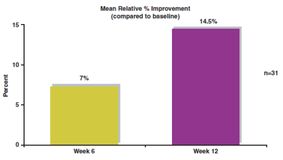
3.7 Anti-Aging Efficacy Evaluated in Human Volunteers
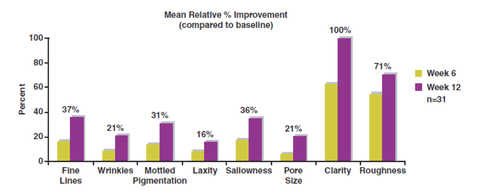
✔ A clinical study was conducted on 31 women aged 39–60 years using a cream containing 8% Lactobionic Acid at pH 3.8 for 12 weeks.
=> The results showed:
– Skin firmness improved significantly after 6 and 12 weeks.
– Skin texture and overall skin condition improved.
– Periocular fine lines were reduced after 12 weeks.
– The test product was well tolerated and did not increase signs of irritation.
– Participants also reported noticeable improvements in their skin.
Histological evaluation also showed an increase in viable epidermal thickness, improved stratum corneum structure, increased GAGs in the dermis and reduced MMP-9 expression in keratinocytes.

3.8 Application of SpecKare® LBA
✔ SpecKare LBA is highly soluble in water and has strong hygroscopic properties.
✔ SpecKare LBA is highly soluble in water and has strong hygroscopic properties.
✔ SpecKare LBA can be used in both:
Hot process: Suitable for high-temperature emulsification processes.
Cold process: Heating is not required.
✔ For finished formulations:
• pH 4.0–6.5: Suitable for general formulations.
• pH 4.0–5.5: More suitable when used for exfoliating applications.
✔ Recommended usage levels:
• 0.5–2%: Daily-use applications
• 2–6%: Intensive-use applications
• 10–25%: Special applications
=> Usage levels may vary by country and should comply with applicable local regulations.
Contact 3H Cosmetic for ingredient consultation, formulation support and samples.
Hotline: 032 761 2525
Website: 3hcosmetic.com


